
For a more premium feel, focus on how fabrics work together, not just how much they cost.
Your fans already love the character. They recognize the expression, the hairstyle, and the details that make it yours. When you turn that character into a plush for sale, getting those details right matters.
But there is another question to consider before launch: when someone opens the package and holds the plush, will the product feel worth what they paid?
A sample can look recognizably like your artwork and still look a little flat. Fabric selection is one place to look. The surface of the face, the texture of the hair, and the way the clothing sits alongside them all contribute to the impression of quality.
Give each part of the character its own material role
When we discuss materials, it is easy to focus on finding one “better” fabric. For many designs, a more useful starting point is to look at each part of the character separately.
A doll’s face might call for a fine, even-looking surface. Its clothing or hair may benefit from a different texture. Together, those choices can help the finished piece feel more layered and intentional.
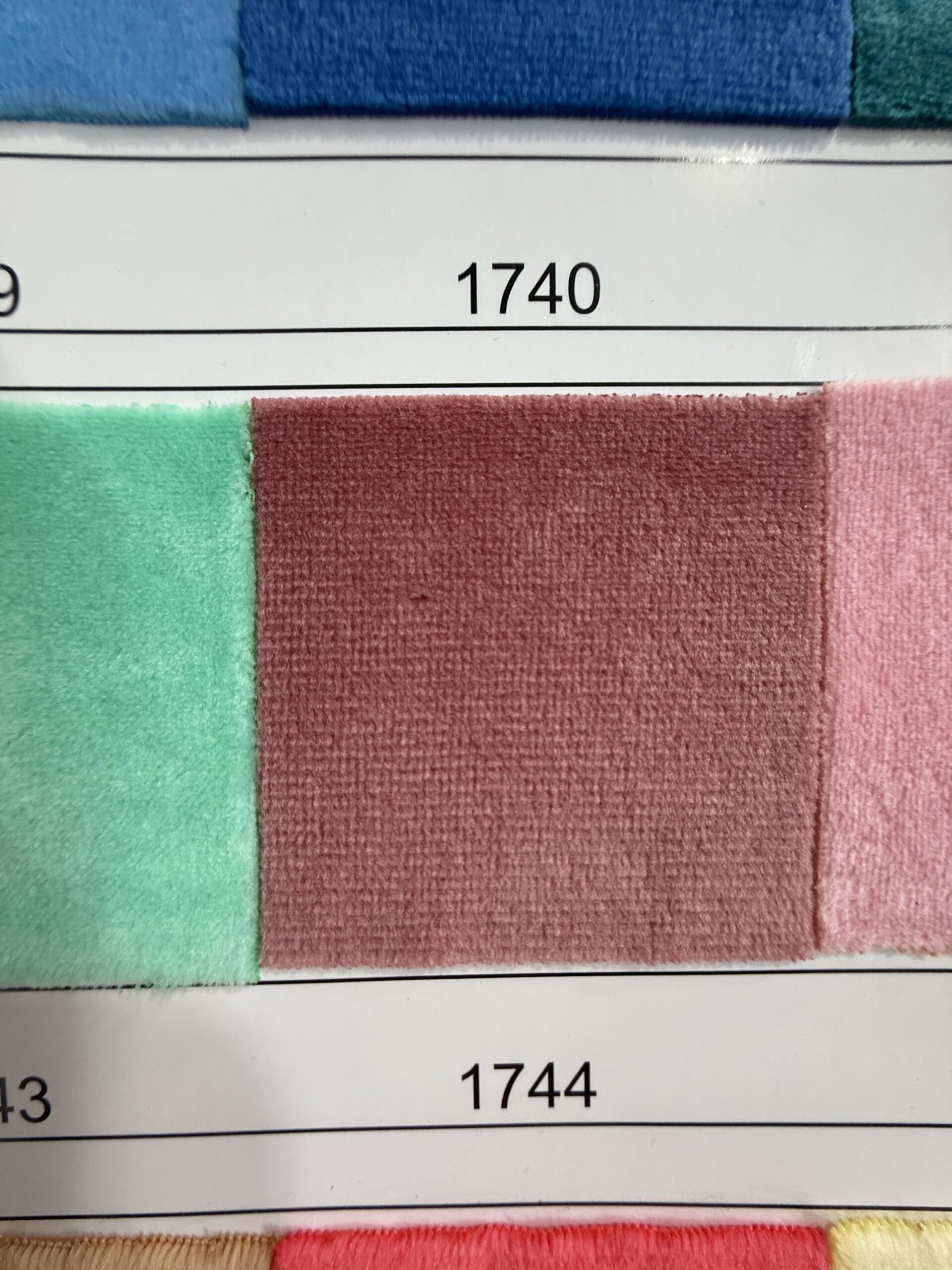
For some doll designs, we recommend diamond velvet for the face or exposed skin areas. The specific fabrics we select have a finer-looking surface that can give these areas a more refined appearance.
We may then use crystal super-soft for the clothing or hair, depending on the design. The contrast can help the face, hairstyle, and outfit read as distinct parts of the character, while still belonging to the same piece.
This is one possible combination, rather than a formula for every plush.
Why crystal super-soft still has a place
In our own material selection, crystal super-soft options often offer a useful balance of cost and shape control. The comparatively limited stretch of the fabrics we choose can help us achieve the intended form during development.
That makes them worth considering for the role they need to perform. There is little benefit in replacing a fabric that already supports the design simply because another option looks finer on a swatch card.
The actual fabric matters more than the trade name. We look at the specific swatch, how it works with the other materials, and the result in the sample.
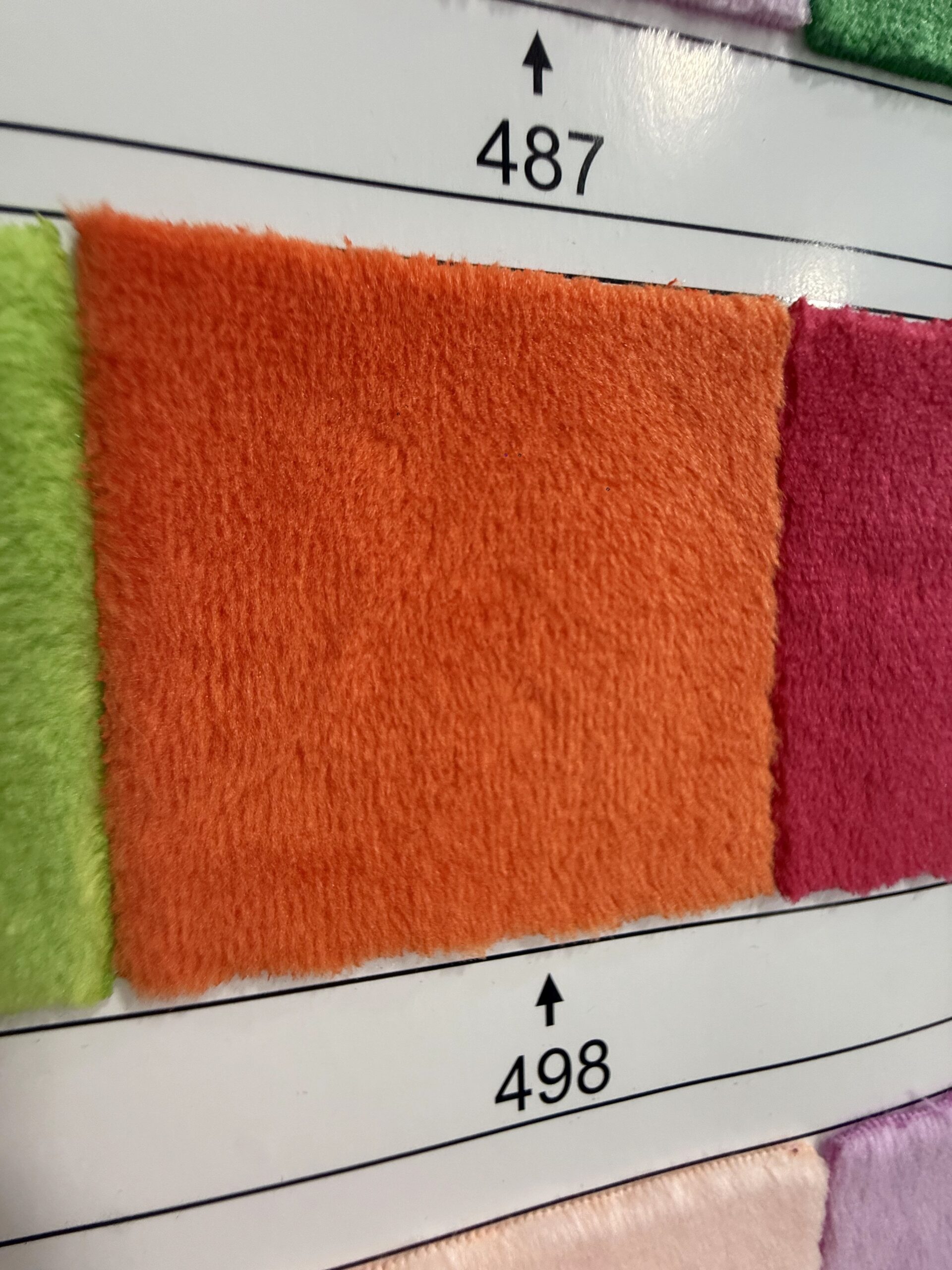
These swatch photos illustrate texture, not a quality ranking or a controlled comparison.
Does every part need the finest-looking fabric?
Using diamond velvet across an entire doll will not automatically create a stronger sense of quality.
If a design benefits from a distinction between skin, hair, and clothing, using different textures can help preserve that distinction. A finer face fabric may stand out more clearly beside a different surface on the outfit.
For another character, a more uniform texture may suit the design beautifully. The decision comes back to the character and the feeling you want the finished product to have.
The goal is a coherent result, with each material contributing something useful.
Review the whole plush before your launch
When reviewing a sample, go beyond asking whether it looks like the character. Look at how the materials work together at the intended product size.
Consider these questions:
- Does the face have the finish you want fans to notice first?
- Do the hair and clothing feel distinct where the design calls for it?
- Do the textures complement each other, or compete for attention?
- Does the complete plush create the impression you want at your planned selling price?
Assess the physical sample as well as the photographs. A close-up swatch can help you explore a texture, but it cannot show how the whole plush will look and feel.
Fabric is only part of that experience. Pattern development, proportions, embroidery, stitching, and filling also contribute to the finished result.
Plan the fabric mix around your character
If you already have an audience and are preparing a plush release, bring material decisions into the development conversation early.
Share your artwork, intended size, and the key features your fans will expect us to preserve. At FIGTRA, we can look at those details together and discuss which fabrics belong where, so the material choices support the character and the product you want to launch.