
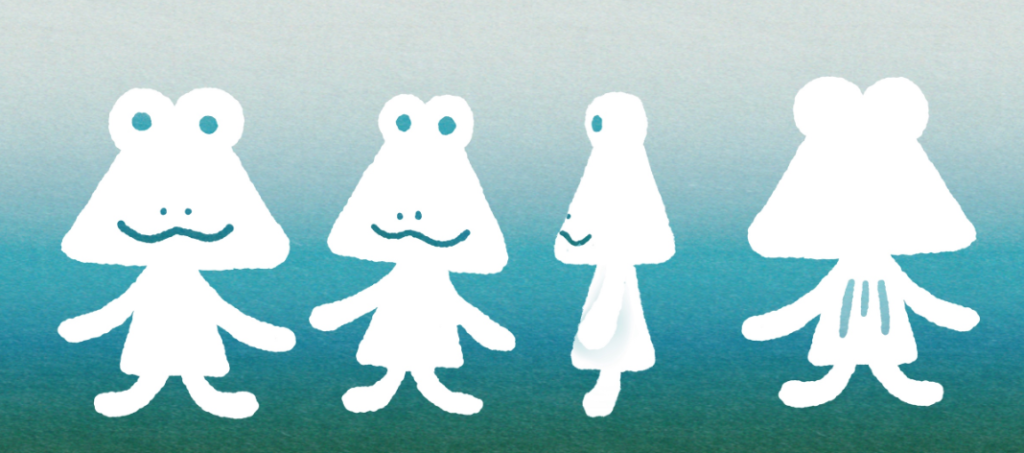
You know your character well. You may already have a clear idea of its expression, proportions and the feeling it should convey.
But when a two-dimensional drawing becomes a plush you can hold, preserving those qualities also depends on decisions you cannot see in the artwork. Fabric is one of them.
Will a Fabric You Like Work for Your Character?
We once worked on a character with a seemingly simple silhouette. The creator had a fabric in mind, but once we made a test sample, we found that it was quite stretchy. The shape of the sample was not what we had hoped for.
We did not settle on the material right away. We continued testing over several rounds.
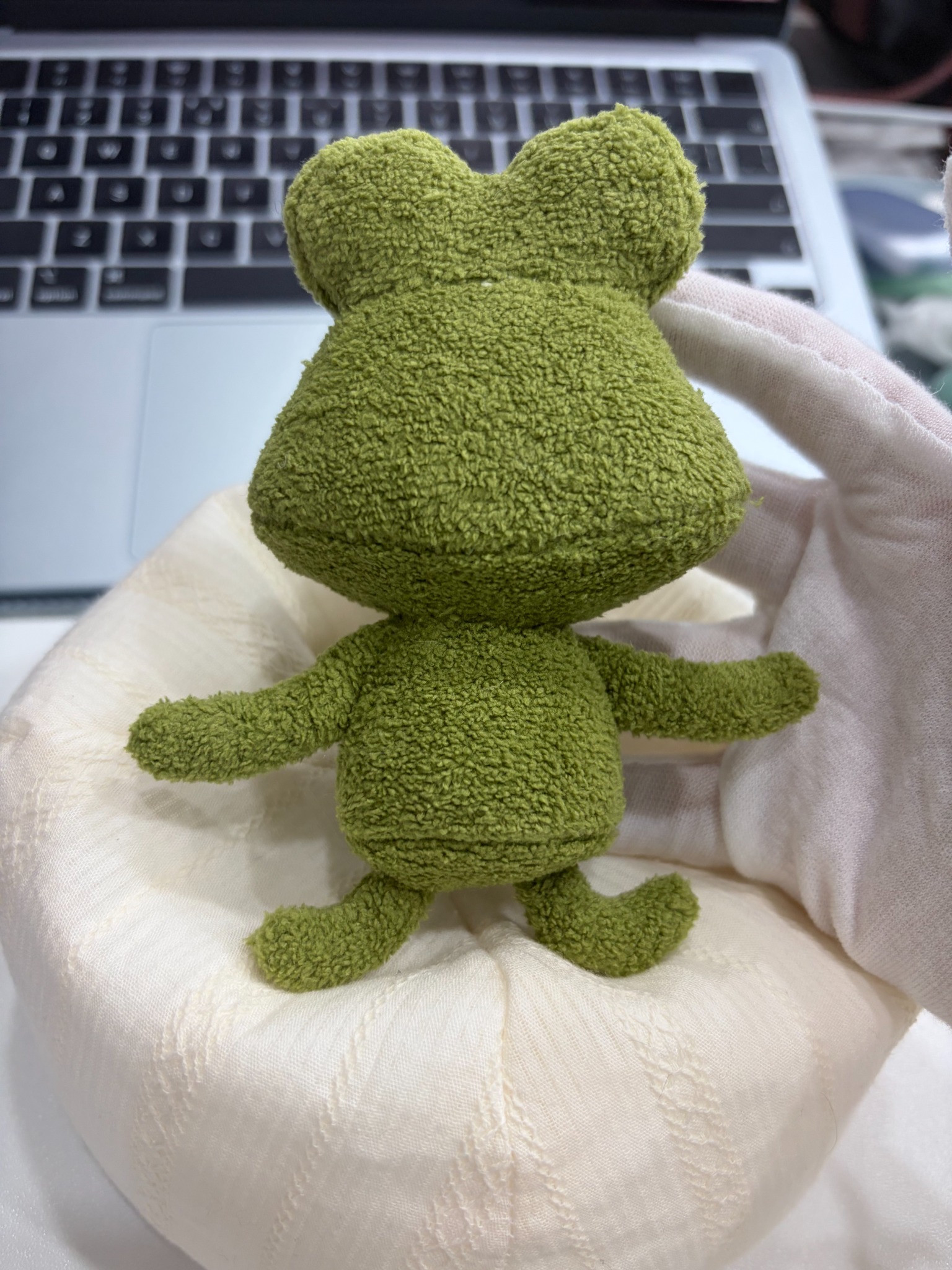
In one comparison, we kept the same pattern and filling and changed only the fabric. A different material, with a noticeable surface texture, gave us a silhouette that worked better for the character. The overall feel was also closer to the direction we had in mind.
That comparison helped us see more clearly how fabric can affect the character's shape, as well as how the plush feels to touch.
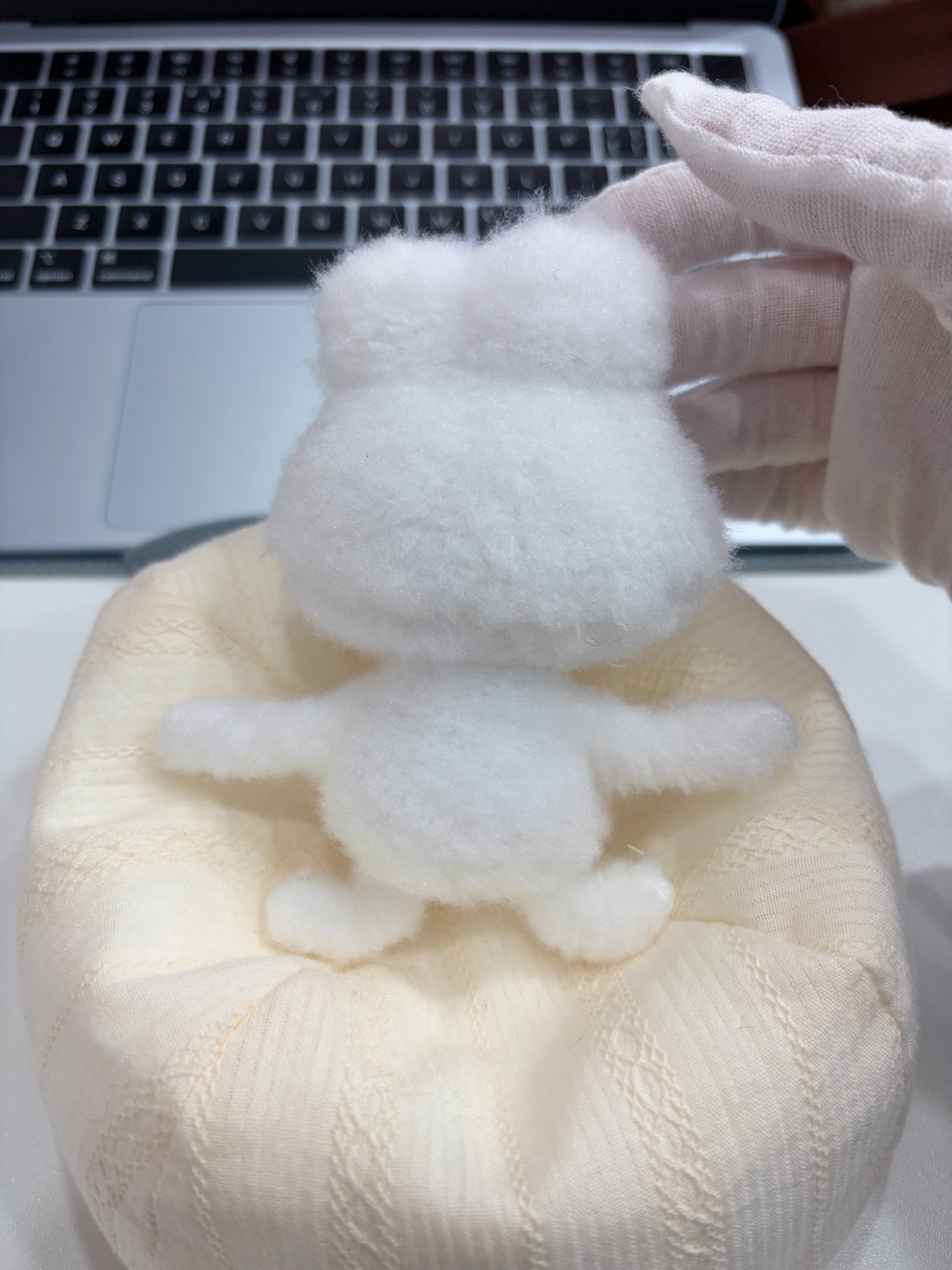
Consider Both the Size and the Character's Personality
When choosing fabric, we look beyond whether a small swatch looks good or feels soft enough. We consider how it will work in the actual piece.
For a smaller character, for example, we need to choose the pile height more carefully. If the fibers cover small details in the outline, a shape that looks clear in the artwork may become less distinct in plush.
Alongside pile height, we consider the fabric's stretch, surface texture and how it fits the character's personality. We are looking for a material that can support the shape while expressing the creator's idea.
In this project, the fabric we ultimately chose gave us a shape closer to what we had hoped for, and its texture added a quality that suited the character. The creator was pleased with the choice.
Bringing Our Perspectives Together
You do not need to become an expert in fabrics and production techniques before you can begin developing a plush.
You bring your understanding of the character, brand and audience. We bring our judgment about materials, proportions, structure and production techniques. When the artwork cannot answer a question on its own, we work through it together through discussion and test samples.
At FIGTRA, sampling is also a process of developing together. Our work is to help creators turn the character they have in mind into something they can see and hold, one step at a time.
If you are planning a plush product for your character, you can start by sharing the artwork and the features you most want to preserve. Together, we can discuss which materials and development decisions are worth testing first.